Car Amplifier Buying Guide: Picking the Right Amp for Your Car
The right amp depends on three things: what radio you have, what you want to power, and how much room you can give up. Tell us those and we can usually narrow it to two or three amps in a few minutes. Here is how we walk people through it at the counter.
Car audio · · Audio MotorSports, Carson
Start with your car, not the amp
Before we talk channels or watts, we ask a few questions. Are you keeping the factory radio, or do you have an aftermarket one? Do you want bass you can feel, cleaner door speakers, or both? Do you need to keep the trunk or the space behind the seat? And is this the whole plan, or step one of something bigger?
Those answers decide most of it. A driver keeping a factory radio in a newer car needs a clean signal before anything else. Someone who just wants a sub needs a mono amp. Someone building a full system in stages might be better off buying one bigger amp now than two small ones later.
So the sections below follow those situations, not price. Find the one that sounds like you.
Keeping the factory radio: get a clean signal first
A lot of people want to keep the factory screen, the steering wheel buttons and the backup camera. That is fine. The amp just needs a signal it can use. On many cars the simplest fix is a line output converter like the AudioControl LC2i PRO. It takes speaker-level signal up to 40V RMS, gives you up to 9.5V RMS outputs plus a dedicated bass output, turns the amp on by sensing signal, and comes with a dash remote. AccuBASS helps put back bass that many factory radios roll off.
Newer cars with premium sound can be trickier, because the factory system often splits and delays the signal. If your factory sound is thin on the low end no matter what, the AudioControl Epicenter Micro is a small bass restoration processor with a remote, and we can tuck it behind the dash or under a seat.
Which one you need depends on your exact car and trim. We confirm that before we sell you anything.
First real bass: a mono amp for your sub
If bass is the goal, you want a mono amp. On a factory radio, the Kicker 47KEY500.1 is an easy one to like. It has an automatic processor that listens to your radio with Kicker test tones, corrects peaks and puts back missing bass. It makes 150 watts RMS at 4 ohms, 300 at 2 ohms and 500 at 1 ohm, and its FIT+ inputs take speaker-level signal up to 40 volts.
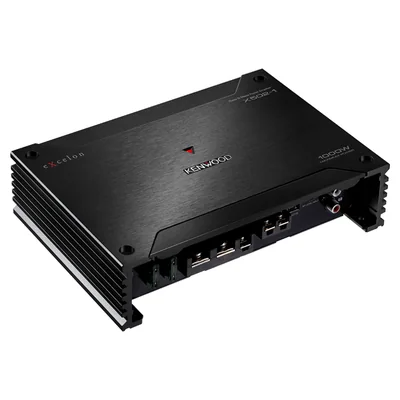
If you have an aftermarket radio, or just want a simple sub amp, the Kenwood Excelon X502-1 is rated 500 watts RMS into 2 ohms. It has a subsonic filter, bass boost, preamp and speaker-level inputs, and a remote bass knob for the driver's seat.
Short on space? Our listing shows RCA inputs, so if you are keeping the factory radio, ask us how we would feed it. Whatever you pick, match the amp to your sub's final impedance. We check that for you.
Cleaner, louder doors: a 4-channel amp
Good speakers on radio power still run out of room when you turn it up. A 4-channel amp fixes that.
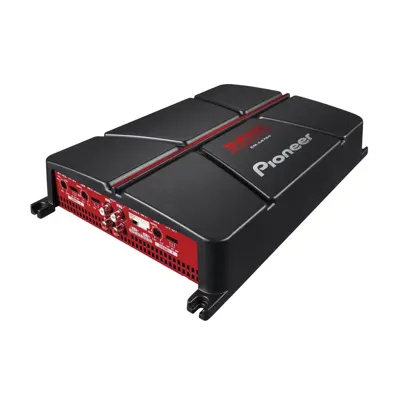
For a simpler step up, the Pioneer GM-A4704 gives 40 watts RMS x 4 at 4 ohms or 65 x 4 at 2 ohms, and it takes speaker-level input, so it can work with a factory radio. If space is really tight, the Kicker KEY 53KEY200.4 makes 50 watts RMS x 4 at 4 ohms in a chassis about 1-11/16 by 2-3/4 by 7-3/8 inches. It comes with a microphone that measures your cabin and sets the EQ for you.
The tradeoff: the small amps are easy to hide but give you less power. The bigger ones need more room and more wire.
Room to grow: one 5-channel amp for everything
If you know you want speakers and a sub, a 5-channel amp is often the cleaner path. One power wire, one ground, one spot to mount it.
The honest tradeoff is that the sub channel shares the amp with your speakers. For a full, balanced system that works great. If you want very big bass, two separate amps give you more room. We will tell you which way makes sense for your goals, not push the bigger ticket.
The parts nobody shows off: wiring and deadening
The wiring kit matters as much as the amp. A weak power or ground wire can cause heat, noise and an amp that cuts out. For a mid-power amp, the Rockford Fosgate RFK4X is a complete 4-gauge kit with 17 feet of power wire, 3 feet of ground wire, a fuse holder with a 100-amp fuse, RCA cable, speaker wire and remote wire. It is oxygen-free copper, not copper-clad aluminum. We check the amp's draw before we pick the gauge.
Sound deadening is the other piece people skip. When you add power to door speakers, the doors start to buzz. A Dynamat Xtreme 10435 Door Kit has 12 square feet, enough for two standard doors. It cuts rattles and helps mid-bass sound fuller and cleaner.
What to tell us before you come in
A few details save a lot of back and forth. Bring or text us: the year, make and model, the trim level, and whether you have a factory amp or premium sound package (look for a brand name on the speaker grilles or radio). Tell us if you are keeping the factory radio, what speakers and sub you have now, and whether you need to keep the trunk or rear seat space.
Also tell us where you want to end up, not just where you are starting. If a sub is coming later, we can run the right wire once now. You can also check our Shop by vehicle tool on the site to see what fits your car before you call.
How buying, install and pickup work
Everything is bought, installed and picked up at the shop at 22025 S Avalon Blvd Ste A in Carson. Call us or text us to confirm the amp is in stock before you drive over.
We install in our own bay, often the same day.We confirm fit and wiring for your exact car before the work starts.
The right sub setup depends on three things: how much space you can give up, how hard you want it to hit, and what radio you are keeping. Small space and a factory radio usually means a powered sub. A trunk or truck cab you can give up means a loaded box and a mono amp. Here is how we point people at the counter, with the parts that come along for the ride.
Pick a line output converter like the AudioControl LC2i to add a sub amp to a factory radio in the simplest way. Pick the AudioControl LC7i when the factory system splits its signal to tweeters, doors and a sub. Add an Epicenter when the factory radio rolls off the bass. Pick an OEM integration processor or a sound processor when a newer car's factory signal needs to be corrected before it reaches the amps.
A 4-channel amp powers four speakers, usually the front and rear doors, or a front component set plus a sub when you bridge the rear pair. More clean power lets speakers play louder without the distortion a radio's built-in amp runs into.
Questions on Car Amplifier Buying Guide: Picking the Right Amp for Your Car
Can I add an amp and keep my factory radio?
Usually yes. Many cars just need a line output converter like the LC2i PRO, or an amp with speaker-level inputs. We confirm what your exact car needs.
Should I get one 5-channel amp or two separate amps?
If you want speakers and a sub with a clean install, one 5-channel is simpler. If you want very big bass, a separate mono amp gives the sub more room. Tell us your goals and we will point you the right way.
Do I really need a new wiring kit?
Yes. Each amp needs the right gauge power and ground wire and a fuse near the battery. We pick the kit based on the amp's draw, and it is part of every amp install we do.
Where does the amp go if I need my trunk?
We look at your car and confirm a spot before we start.
How long does an amp install take?
Often the same day, depending on the car and the system. Call or text to confirm your parts are in stock and we can plan the day with you.